 Creator of JenneTastic®
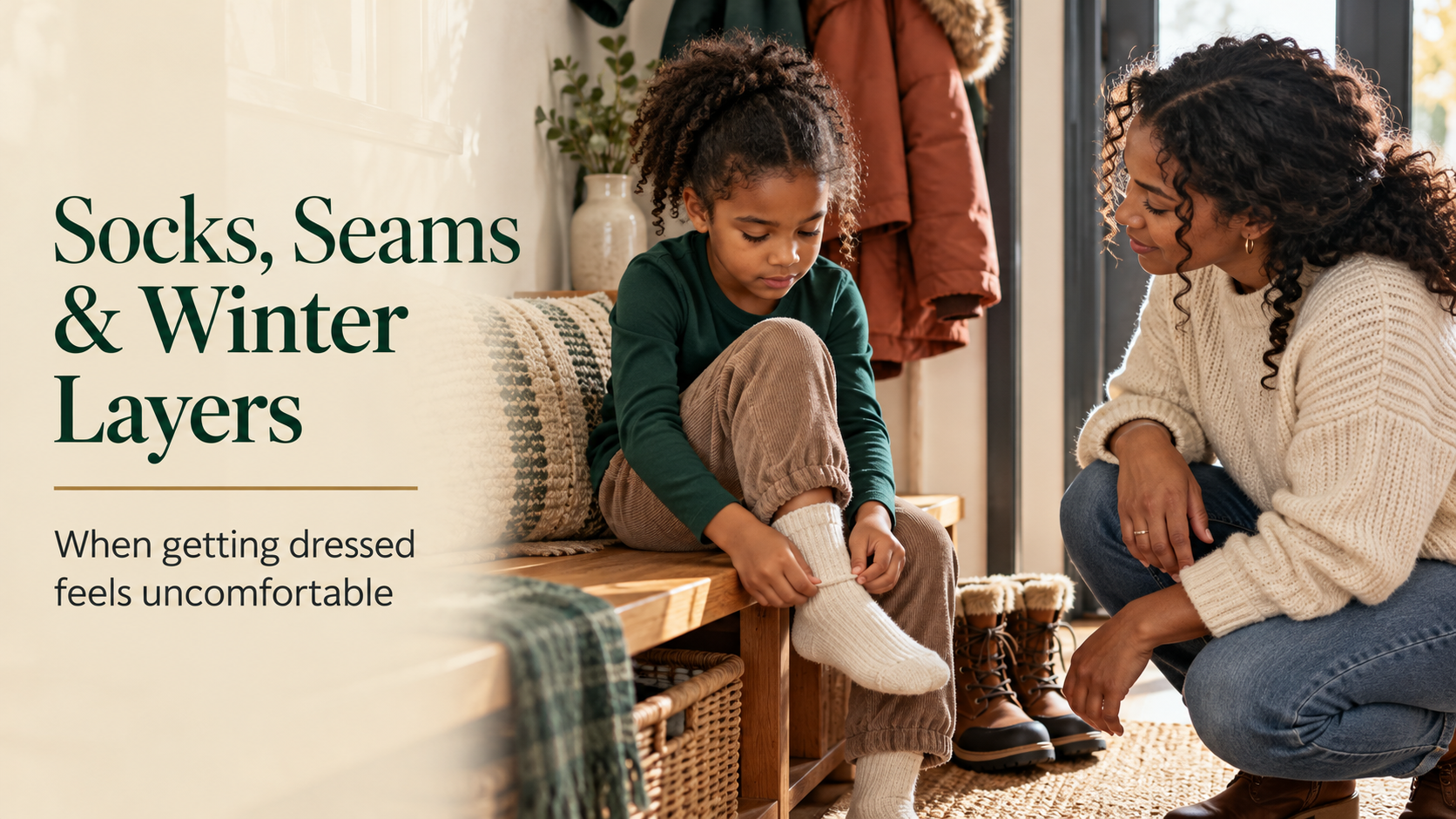
One sock comes off before the other one is on. A familiar shirt suddenly feels wrong. The coat is warm enough, but the collar touches a spot your child cannot stand.
Meanwhile, the clock keeps moving.
Getting dressed can become one of the hardest parts of the morning when clothing feels uncomfortable. Parents may find themselves buying different socks, removing labels or negotiating over the same winter boots every day, without knowing exactly what needs to change.
The difficulty is that “uncomfortable” can mean many things. A seam might press against the toes. A waistband might dig in when a child sits down. A sweater might feel scratchy, a boot might squeeze, or several otherwise comfortable layers might bunch together.
This guide looks at those everyday details: how to work out what is bothering your child, which adjustments are worth trying, how to shop without replacing an entire wardrobe, and how to make clothing routines more manageable at home, school and daycare.
Start with what feels wrong
Before buying something new, try to narrow down the problem. “I hate these clothes” tells you that something is wrong, but it does not tell you whether the issue is the fabric, fit, temperature or task of getting dressed.
A few concrete questions can help: “Does it scratch or squeeze?” “Can you show me where?” “Does it feel wrong standing up, sitting down, or both?” Some children will find it easier to point to a place on their body, turn a garment inside out with you, or compare two pieces of clothing than to explain a sensation in words.
Watch what happens during the complaint. Pulling repeatedly at a neckline suggests a different problem from struggling to get a hand through a sleeve. A child who accepts a coat once someone helps with the zipper may be having trouble managing the fastening. A child who immediately removes it again may be reacting to how it feels.
Clothing discomfort also does not automatically point to a particular diagnosis. Touch preferences, an awkward fit, irritated skin and the effort involved in dressing can all deserve attention. NHS children’s occupational therapy guidance recognises that dressing can involve difficulties with touch, movement and awareness of body position.
Start with the smallest useful investigation. Check the place your child identifies, compare the garment with a comfortable favourite, and change one feature at a time. That makes it easier to discover what actually helps.
Socks, underwear and the layers closest to the skin
Clothing worn directly against the body is a sensible place to begin. A small detail that seems unimportant in your hand can become much harder to ignore when it stays against the same spot for hours.
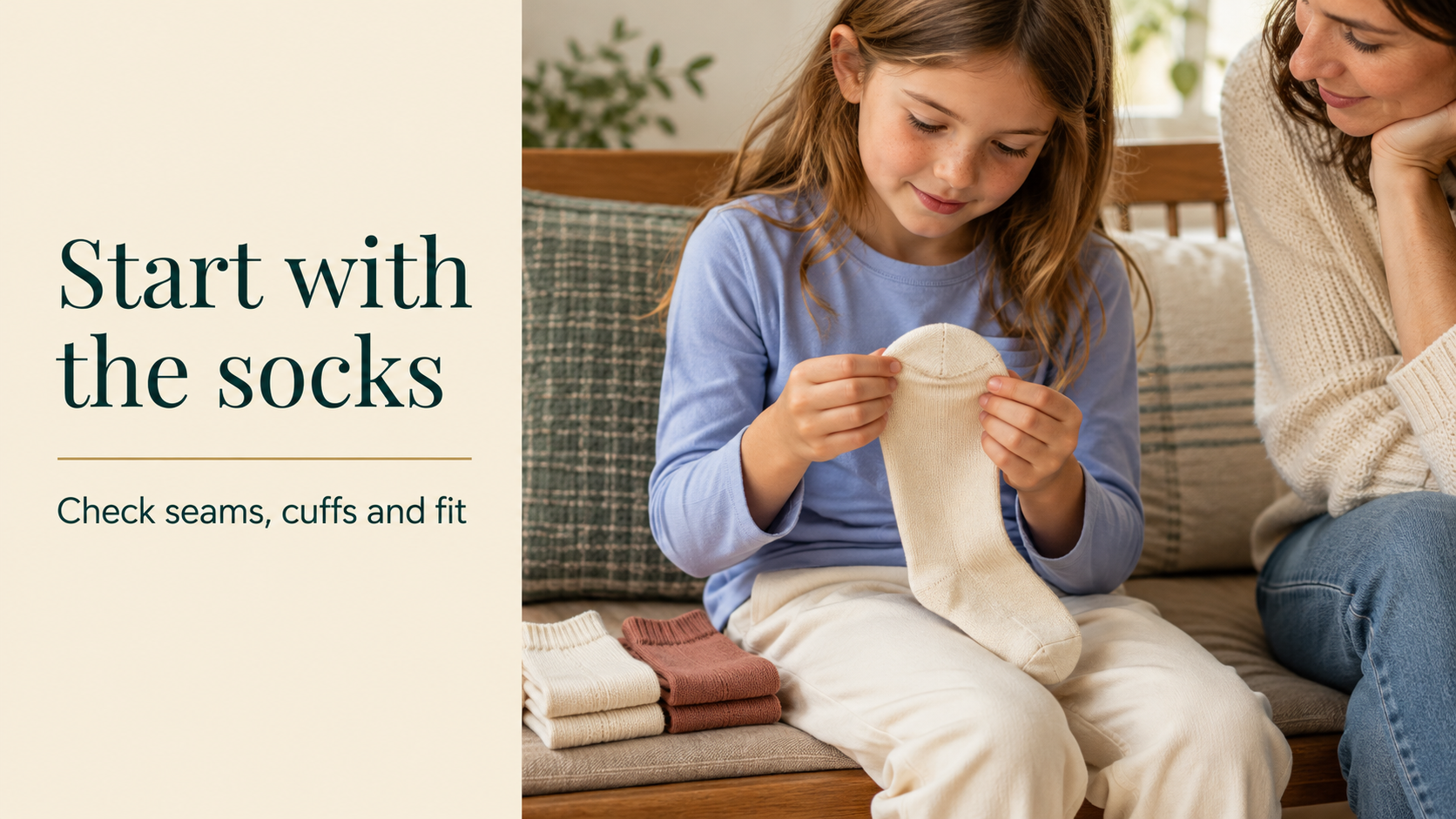
For socks, check the toe seam, the position of the heel and the pressure around the ankle. A sock that is too large may fold inside a shoe; one that is too small may pull across the toes. Before assuming the seam is the only problem, straighten the sock and check whether its heel actually sits over your child’s heel.
Some children prefer socks worn inside out, provided that doing so does not create another uncomfortable fit inside their shoes. Seam-free or flat-seam options are another possibility, but the cuff, material and overall fit still matter. NHS guidance includes inside-out socks and underwear among practical adjustments for children who find seams uncomfortable.
Underwear deserves the same attention. Look at leg openings, waistbands, raised stitching and the way the garment moves during sitting or bending. Different cuts can feel quite different even when the size on the label is the same. If one style works well, record its brand, size, fabric and cut before the label fades.
Base layers introduce another question: how do they behave underneath everything else? A shirt that feels comfortable alone may ride up beneath snow pants. Long underwear may twist at the knees or gather around the ankles inside boots. Have your child sit, bend and walk in the complete outfit before deciding whether a new layer works.
A small supply of reliable essentials can be more useful than a drawer full of experiments. Once you identify a comfortable option, consider keeping a spare pair of socks or underwear available for school or daycare. Avoid buying a large quantity until your child has worn the item through an ordinary day.
Labels, fabrics, waistbands and fastenings
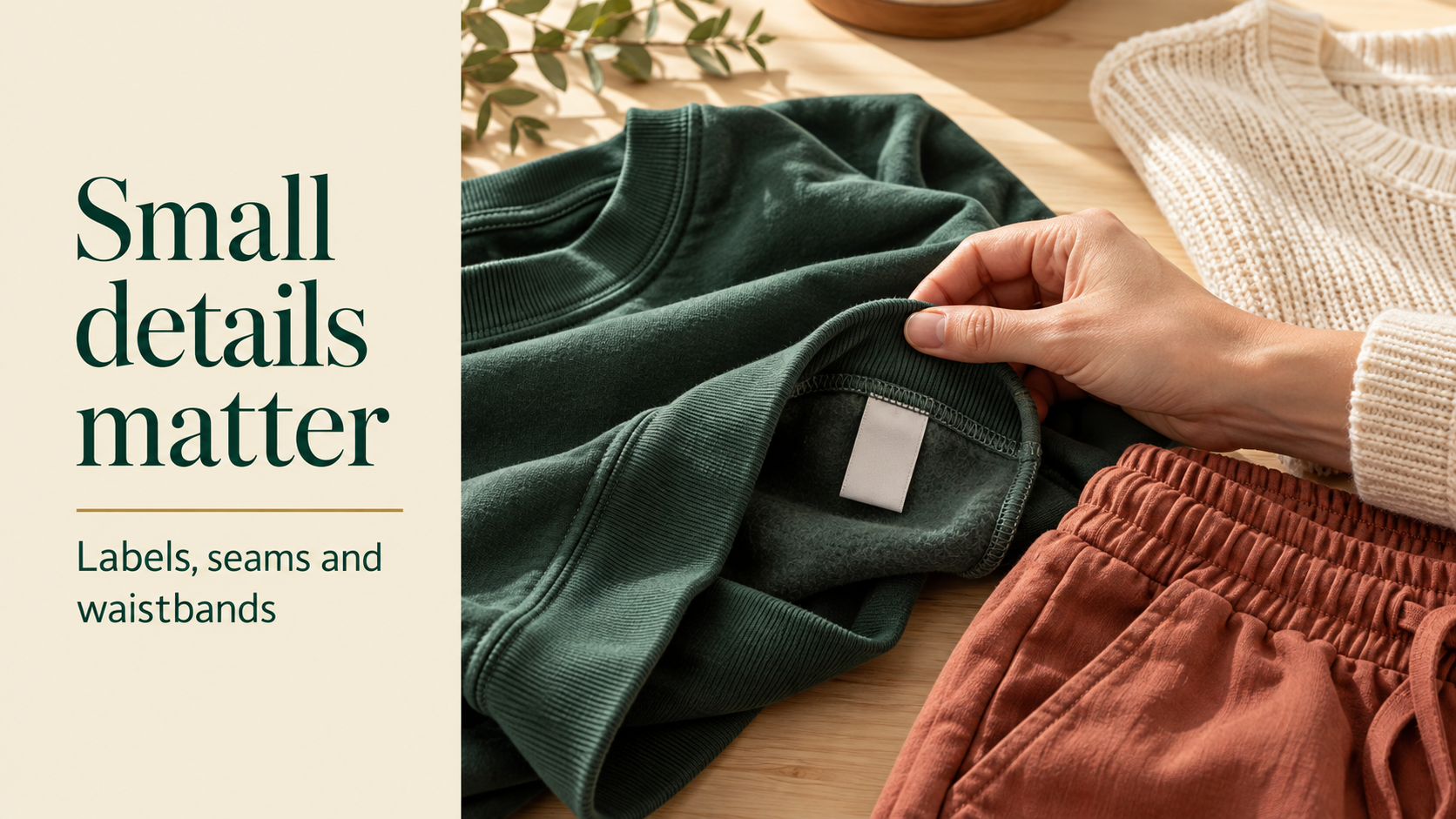
Turn a troublesome garment inside out and run your fingers over the area your child dislikes. You may find a stiff label, thick stitching, a rough embroidered backing or a zipper edge that is difficult to notice from the outside.
Removing a label can help when the label is the actual problem, but cutting it straight across may leave a sharper edge. Check how it is attached before altering it, and avoid cutting structural stitching. Photograph the size, fabric content and care instructions first so you retain information you may need later.
Fabric preferences are individual. One child may like a smooth, lightweight shirt; another may prefer something with more weight or structure. “Soft” on a product description does not tell you how the inside seams, printed design or waistband will feel. Comparing a potential purchase with an accepted favourite is often more useful than relying on a broad fabric label.
Fit also changes with movement. Ask your child to sit down, reach forward and bend their knees. A waistband that seems comfortable while standing may press into the stomach when seated, while a shirt that fits across the chest may pull tightly under the arms.
Fastenings can create a separate obstacle. Small buttons, stiff snaps and zippers that are difficult to engage may turn a comfortable outfit into a frustrating task. Where appropriate, easier closures or a simpler garment can reduce the effort involved. Practise a challenging fastening at a relaxed time, with help available, rather than making the morning departure the daily test.
Keep adjustments specific. If the collar is the problem, begin with the collar. Replacing an entire outfit at once can make it harder to learn which change mattered.
Shoes and boots: check the whole combination
When footwear causes complaints, look beyond the shoe itself. Socks, insoles, tongues, closures and trouser cuffs all affect how it feels.
Start by checking inside. A folded insole, small stone, raised lining or tongue pushed to one side may explain a sudden objection to previously accepted footwear. Then look at fit: whether the toes feel crowded, the heel slips, or a closure presses against the top of the foot.
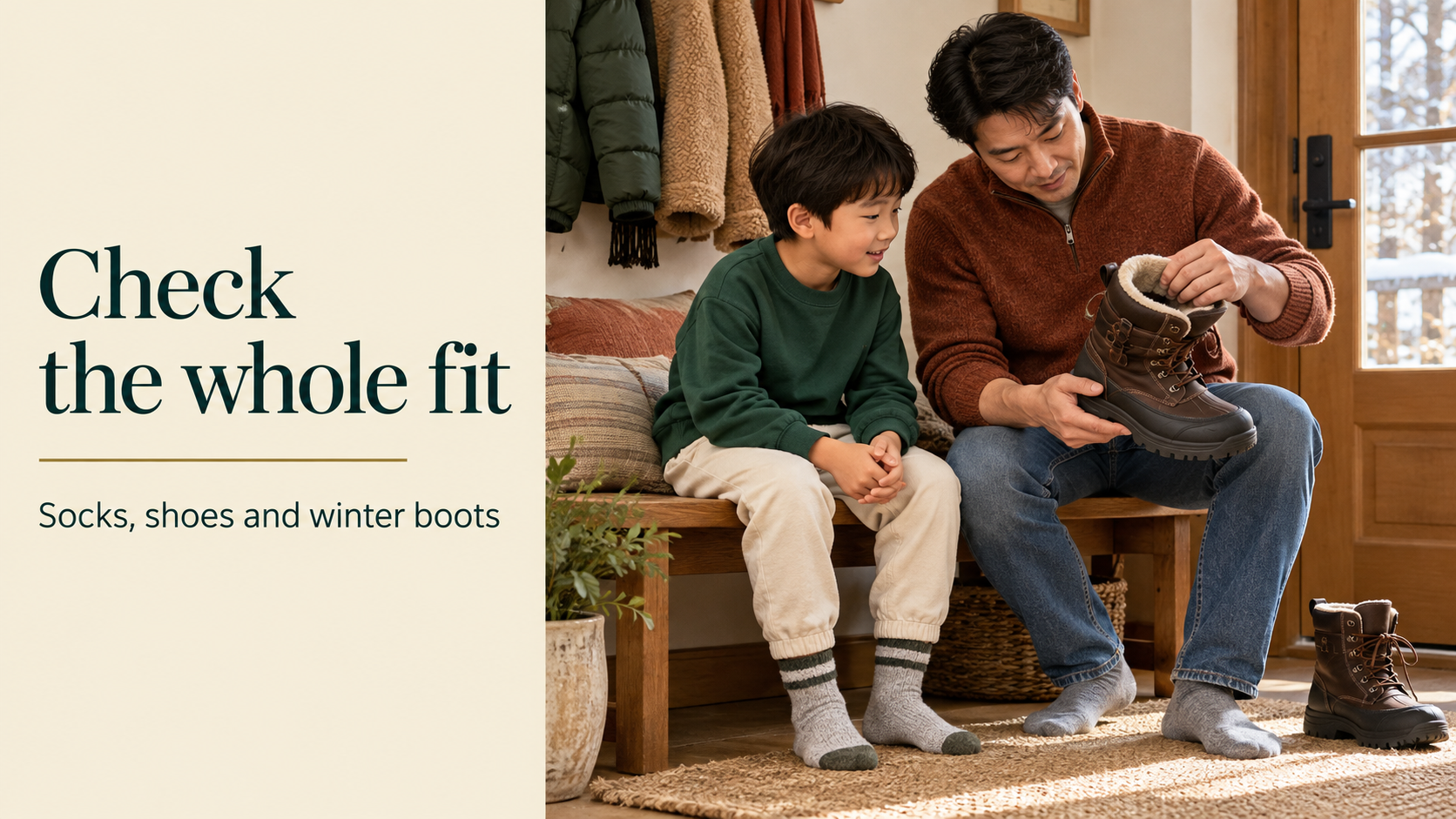
Try shoes and winter boots with the socks your child will actually wear. A boot tested with thin socks may feel very different with a thicker winter pair. Equally, adding several pairs of socks can make footwear tighter rather than more comfortable.
Give your child time to walk, turn and sit while trying footwear. Ask about specific places rather than only asking whether the shoes are “okay.” A child may not notice a rubbing heel until they have moved around, or may struggle to describe pressure without a prompt.
Do not assume that a larger size will solve every problem. Footwear can also be uncomfortable because of its shape, width or internal construction. If fit remains uncertain, seek help from someone experienced in fitting children’s footwear.
Persistent foot pain, limping, blisters or recurring skin damage need attention. Those signs should not be dismissed as a clothing preference or something a child simply needs to get used to.
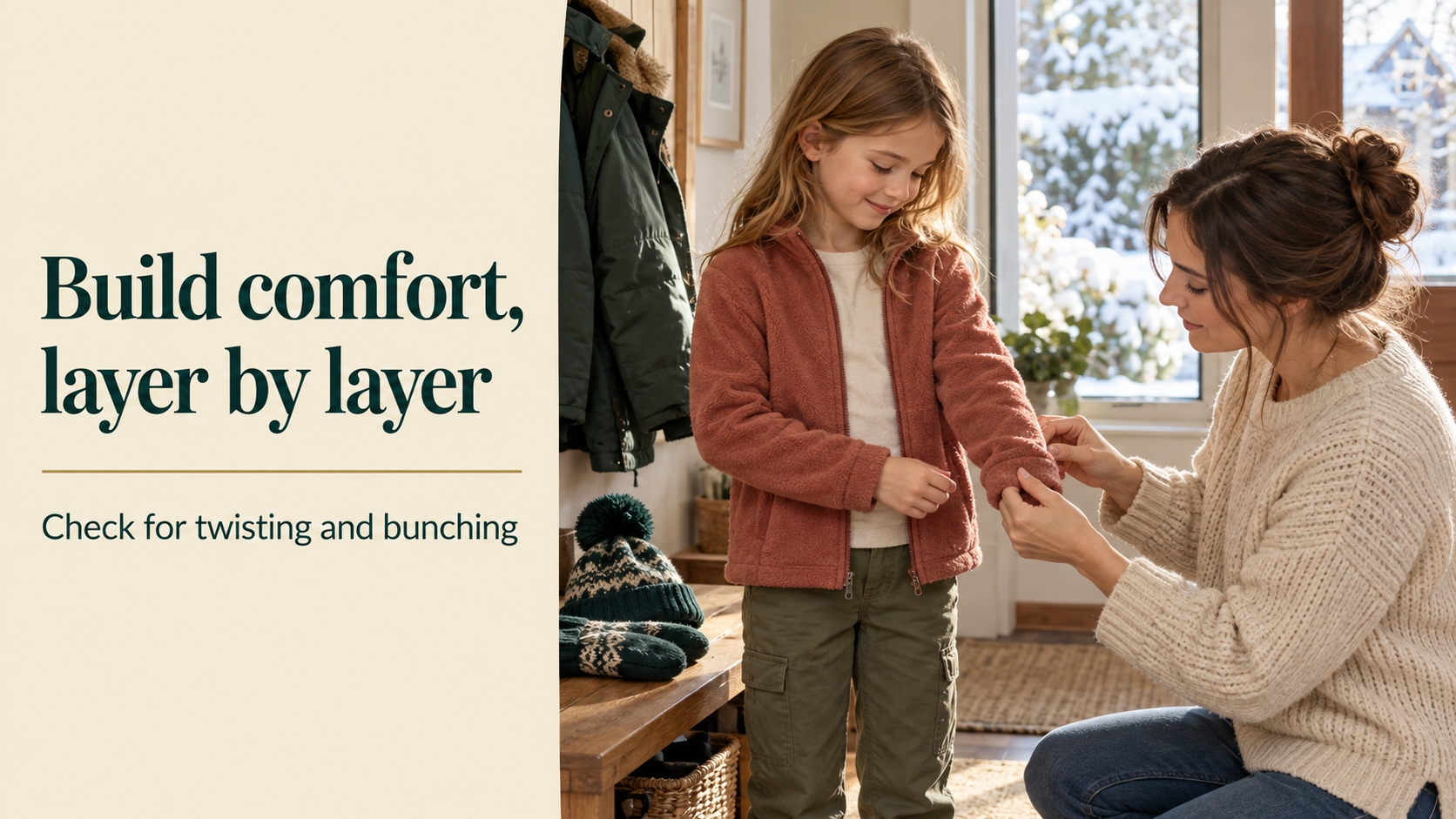
Winter layers: work through the outfit in order
Winter dressing brings several challenges together. There are more pieces to manage, more points of contact and a greater chance that something will twist, bunch or become too warm once indoors.
Work through the outfit in the order your child wears it. Begin with the base layer, then add trousers, sweater, snow pants, coat and accessories. Check each stage before moving on. If everything feels comfortable until the coat goes on, you have narrowed the search.
Sleeves are a common trouble spot. A loose sleeve may push upward inside a coat, leaving a thick fold around the elbow. Your child may be able to hold the end of the sleeve while putting an arm through, or you may find that a different sleeve shape works better. The goal is to avoid leaving several layers gathered in one place.
Look closely at snow pants and boots together. Trouser legs can fold around the ankle, socks can slide down, and straps or waistbands can pull differently once the child sits. Ask your child to squat, sit and take a few steps in the complete outfit.
Hats, mittens and neck coverings deserve individual trials too. A hat may fit comfortably around the head but have an irritating internal seam. Mittens may be warm yet difficult to put on, particularly if the lining moves. Choose accessories appropriate to the child’s age and activity, and avoid loose cords that could catch during play.
Finally, consider the transition indoors. A child who is comfortable outside may become hot while waiting in a hallway or travelling between activities. Clear expectations about which layers come off, and where they go, can help adults respond before discomfort builds. Damp socks or mittens may also need changing, so accessible dry spares can be useful.
A winter car-seat note: Bulky coats and snowsuits can leave dangerous slack beneath a car-seat harness when the material compresses in a crash. Follow the car-seat manufacturer’s instructions; thin, well-fitting layers and a blanket placed over a correctly secured harness are options described by child-passenger safety guidance. Clothing must also allow the seat belt to fit correctly when a child uses a booster.
Shopping without replacing the whole wardrobe
The most useful shopping list may begin with what already works. Choose one or two accepted garments and identify their details: neckline, sleeve shape, waistband, seams, fabric, stretch and fastening.
Photographs can help you compare options online or in a store. Record the product name or number if it is available, particularly for socks and underwear that may look almost identical in their packaging. A replacement in the same brand is not necessarily made in the same way, so compare the details when possible.
Buy one trial item before purchasing multiples. Check the return policy before removing labels, washing or wearing it, and decide whether the trial is worth the cost if it cannot be returned. This is especially helpful with products marketed as seamless, sensory-friendly or adaptive, because those descriptions do not guarantee an individual child will find them comfortable.
When trying clothes, include ordinary movements. Sitting on a chair, reaching overhead and bending down reveal more than standing briefly in front of a mirror. At home, test an unfamiliar outfit on a day when there is time to change it.
Second-hand clothing may offer a lower-cost way to try a style, although its condition still matters. Check for stretched elastic, rough repairs, worn linings and laundering fragrances. An item that has softened with wear may appeal to one child and feel wrong to another.
If a favourite is being discontinued, look for the closest match before the last usable item wears out. For uniforms or dress codes, ask the school which features are required and whether a different fabric, trouser cut or fastening is acceptable. A specific question is easier to answer than a general request for “more comfortable clothes.”
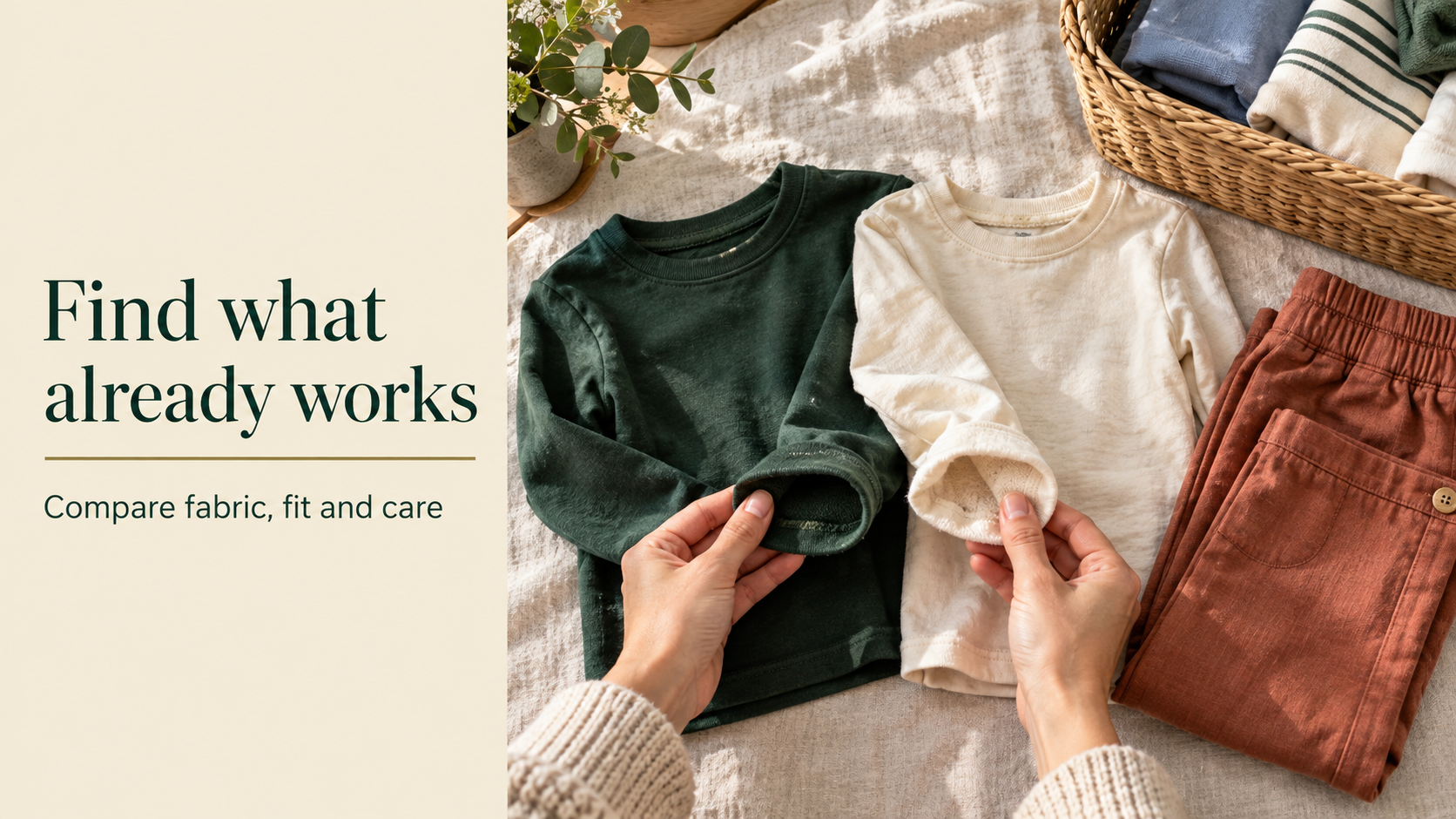
Laundry can change how clothing feels
Sometimes the garment has not changed on the label, but it has changed in the wash. Shrinkage, a stiff printed design, altered texture or elastic that no longer sits comfortably can affect an accepted item.
Follow care instructions and inspect clothing after laundering. Compare a rejected garment with one your child still wears: has the waistband tightened, has the fabric become rougher, or has a seam started curling? This can prevent you from repeatedly buying the same item when laundering is part of the difficulty.
Fragrance is another consideration. If smell is the concern, review detergents, fabric treatments and storage products rather than changing everything at once. For children with eczema, the American Academy of Dermatology recommends fragrance-free products and explains that “unscented” does not necessarily mean fragrance-free. That is skin-care guidance for eczema, rather than proof that detergent explains every clothing complaint.
Where washing is appropriate, do it before a new garment is needed urgently. Allow time to discover whether the texture or fit changes, and keep an accepted alternative available.
If the problem began after switching a laundry product, make a note of the timing. That information may be useful if there is also itching or a rash. Avoid repeatedly adding products in an effort to make clothing softer without knowing which feature is causing concern.
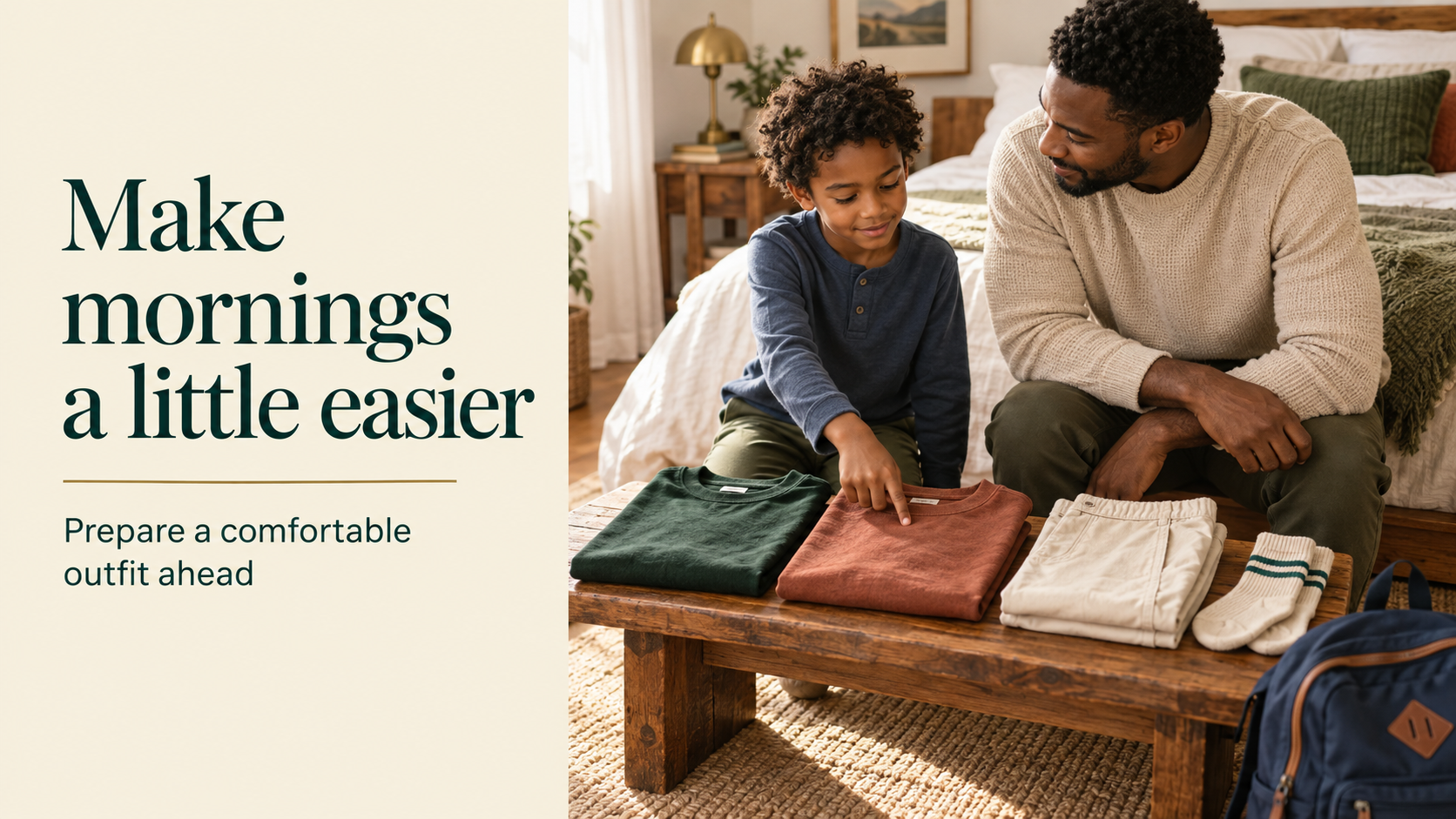
Build a morning routine around reliable clothes
Morning routines work better when they rely on clothes that have already passed a comfort check. An unfamiliar outfit is an experiment, and experiments are easier when nobody is watching the clock.
Prepare a small selection of weather-appropriate, accepted clothing ahead of time. If your child wants choices, make those choices manageable: two shirts that both work, rather than a full drawer that includes several uncomfortable options. Include the shoes and outerwear in the plan when they regularly cause difficulty.
Keep the dressing area practical. A stable place to sit, enough room to move and clothing within reach may help a child manage the task. Notice whether an adult’s help is needed for a particular step, then make that help predictable.
Consider this hypothetical example: a child repeatedly pulls off their winter boots and says they feel wrong. Instead of replacing the boots immediately, the parent checks the complete outfit and finds long underwear gathered around the ankles. Straightening the layer and trying a different cuff arrangement addresses the immediate issue; a second trial later shows whether the adjustment is reliable.
That example will not explain every boot complaint. Its value is the process: identify the location, inspect what is touching it and test one change. If the adjustment fails, you have still learned something useful.
Keep a backup outfit for genuine surprises. Children grow, clothing wears out and a familiar item may become uncomfortable. A backup gives you somewhere to go next without turning every difficult morning into a new shopping decision.
Share useful details with schools, daycares and relatives
Adults caring for a child need information they can act on. “Clothing can be difficult” is less useful than “Please check whether the sock has folded under the toes” or “This child needs help starting the coat zipper.”
A short note can describe the accepted spare clothing, the specific adjustment that usually helps and the task the child can manage independently. Include where spares are kept and how wet or dirty items should be sent home. Update the information when something changes.
School and daycare routines may introduce conditions that do not happen at home. Winter dressing can take place in a crowded entryway, with limited time and several children needing help. Ask which part of the routine is difficult before assuming the same approach will fit every setting.
Protect the child’s privacy. Clothing adjustments and personal-care needs should be discussed with relevant adults discreetly. A spare pair of underwear or assistance with fastenings should not become a public conversation.
Consistency does not require every adult to use exactly the same words. It means they understand the concern, respond respectfully and know which practical steps to try.
When clothing discomfort needs additional help
Clothing adjustments have limits. Persistent pain, itching, a rash, broken skin, swelling or recurring pressure marks should prompt attention to the physical cause. A new problem with previously comfortable clothing also deserves a fresh look rather than an automatic assumption that it is the same old difficulty.
Arrange medical advice when symptoms persist, worsen or interfere with everyday activities. Skin conditions and irritation can have different causes, and an accurate assessment matters when deciding what to change. The American Academy of Dermatology notes that childhood eczema and contact dermatitis can resemble one another but require the correct diagnosis and management.
Help may also be useful when dressing regularly prevents attendance, leaves very few wearable options or creates substantial distress despite practical adjustments. A healthcare professional can discuss the concerns and whether an occupational therapy assessment or another service is appropriate.
Bring specific observations to that conversation. Which garments are difficult? Where does the discomfort happen? Is there a visible skin change? Does the child need help with the movement or fastening? What has already been tried?
You do not need to arrive with a diagnosis or a perfect explanation. A clear description of the problem and its effect on daily life is a useful starting point.
A quick clothing troubleshooting guide
Use this as a starting point for investigation. An adjustment is worth keeping when it improves comfort and remains practical for the activity.
What you notice
What to check
A possible adjustment
Socks come off repeatedly
Toe seam, heel position, twisting and cuff pressure
Straighten the sock; trial a different fit or inside-out wear if comfortable inside the shoe
Underwear is constantly adjusted
Waistband, leg openings, seams and garment cut
Compare with an accepted pair and try one alternative cut
A shirt is rejected at the neckline
Label, collar edge, raised stitching or fit
Inspect the inside and safely address the specific rough point
Trousers are uncomfortable when seated
Waistband pressure and fabric pulling
Test seated fit and compare a different waist or cut
Shoes or boots prompt complaints
Sock folds, insoles, tongue position and fit
Inspect inside and trial with the socks normally worn
Winter clothing feels bulky
Gathered sleeves, twisted base layers and ankle bunching
Add layers in order, checking movement after each
Mittens are difficult to tolerate
Lining position, seams, fit and dampness
Check the lining and try an appropriate alternative with a dry spare available
Clothing feels different after washing
Shrinkage, texture, elastic and laundry products
Follow care instructions and investigate one change at a time
Getting dressed stalls at a fastening
Difficulty managing buttons, snaps or zippers
Provide predictable help or choose an easier closure
Pain, rash or skin damage continues
A possible physical cause beyond garment preference
Seek appropriate medical advice
Make the next outfit easier to understand
You do not have to solve the entire wardrobe at once. Start with the item that causes the most difficulty, investigate the specific problem and keep track of what works.
A well-positioned sock, a different waistband or help with a stubborn zipper may seem like a small change. For the child wearing it, that detail can matter throughout the day.
The aim is comfortable clothing that suits the weather, the activity and the child—and a routine built around useful information instead of repeated guesswork.
For families also exploring an optional space for a supervised pause, discover JenneTastic from JenneDesign. It serves a different purpose from clothing adjustments; persistent discomfort still needs attention to the garment, fit, skin or dressing task itself.