 Creator of JenneTastic®
Reviewed October 6, 2026. This educational guide does not replace an individual assessment. The photographs are illustrations of everyday support, not accounts of particular children or clinical results.
A hand dryer starts unexpectedly, and your child refuses to enter the washroom again. At school, a bell interrupts a lesson they were enjoying. Your teenager wants to see friends but finds the lunchroom too difficult to stay in. These situations can leave parents wondering whether the problem is the sound itself, fear of what might happen next, or the effort of managing several demands together.
Children with autism can experience sound in ways that interfere with ordinary activities. The useful starting point is to understand what happens for your child, help them communicate it, and make practical changes that preserve opportunities to learn, visit family and enjoy their interests. This guide focuses on sound sensitivity, from the toddler years through adolescence. Adults can experience it too, but their work, relationships and independent decisions deserve a separate guide.
Understanding Sound Sensitivity
When an Ordinary Sound Becomes Difficult
Sound sensitivity is a broad description, not a diagnosis. A child might find a vacuum painfully loud, become frightened before a balloon pops, or struggle to follow conversation when several people speak at once. These experiences can look similar from the outside, although they call for different questions during an assessment. Covering the ears tells you that something needs attention; it does not identify the cause by itself.
The NHS explanation of hyperacusis describes everyday sounds feeling unusually loud, sometimes painfully so. It also distinguishes misophonia, in which particular sounds produce strong emotional reactions, and phonophobia, involving anxiety around sounds. Sensory overload is broader: the person becomes overwhelmed by the demands or sensations of a situation. An uncomfortable sound may contribute, alongside crowding, bright light, uncertainty or tiredness. A hearing professional can help clarify these differences when daily life is affected.
A child who enjoys music they choose may still dislike a sudden announcement. Volume is only one detail. Predictability, duration, distance, the room's acoustics and whether the child can leave all change the experience. Rather than concluding that your child is inconsistent, compare the situations. A favourite song at home and a speaker above the supermarket aisle may have little in common beyond both being music.
What Research Can Tell Families
Sound intolerance is common among people with autism, although it is not universal. A 2021 systematic review and meta-analysis estimated current hyperacusis prevalence at roughly 40%, and lifetime prevalence at roughly 60%, using interview and questionnaire data. Estimates differed by how sensitivity was measured. These numbers describe groups; they cannot tell you which sounds trouble your child, how severe the experience is, or which support will help.
Research also examines differences in responses to sound in the brain. Such findings do not give parents a home diagnostic test, and they do not establish that a commercial sensory product will work. A useful research question is narrower: did an intervention improve a meaningful outcome for children with needs similar to yours? Being calmer during a demonstration, completing a hearing test and managing a school lunchroom are different outcomes. Evidence for one cannot automatically be transferred to the others.
The NICE guidance for children and young people with autism recommends considering individual sensory sensitivities when arranging physical environments. That supports examining noise and other surroundings. It does not mean every adjustment has been tested in a randomized trial. Throughout this guide, everyday examples show ways to apply professional guidance; they are not promises that an approach will help every child.
Notice the Pattern Before Choosing a Solution
Write down a few specific incidents rather than building a list of everything your child dislikes. Record the activity, the sound, what happened immediately beforehand, your child's response and what they said or indicated afterwards. Include what helped them continue or recover. A short description such as “covered ears when the dryer started; left with Dad; used a paper towel in another washroom” is more useful than “bad behaviour in public.”
Look for differences between easier and harder days. Was the room crowded? Had your child already managed a demanding morning? Did the sound start without warning? Were they expected to answer questions at the same time? Also note comfortable experiences. If the child can manage the school hall when it is empty but not during assembly, the difficulty may involve several features of the event. Share that distinction rather than assuming the room itself must always be avoided.
Observation has limits. Ear pain, illness, hearing changes, anxiety and communication difficulties can overlap with sensory discomfort. Do not assume that a new response is simply part of autism. Your notes should help a professional ask better questions, not become a substitute for assessment. Equally, parents do not need a completed diagnosis before reducing unnecessary noise or responding to a request for help.
Understanding Your Child's Communication and Age
Helping Non-Verbal Children Tell You What They Need
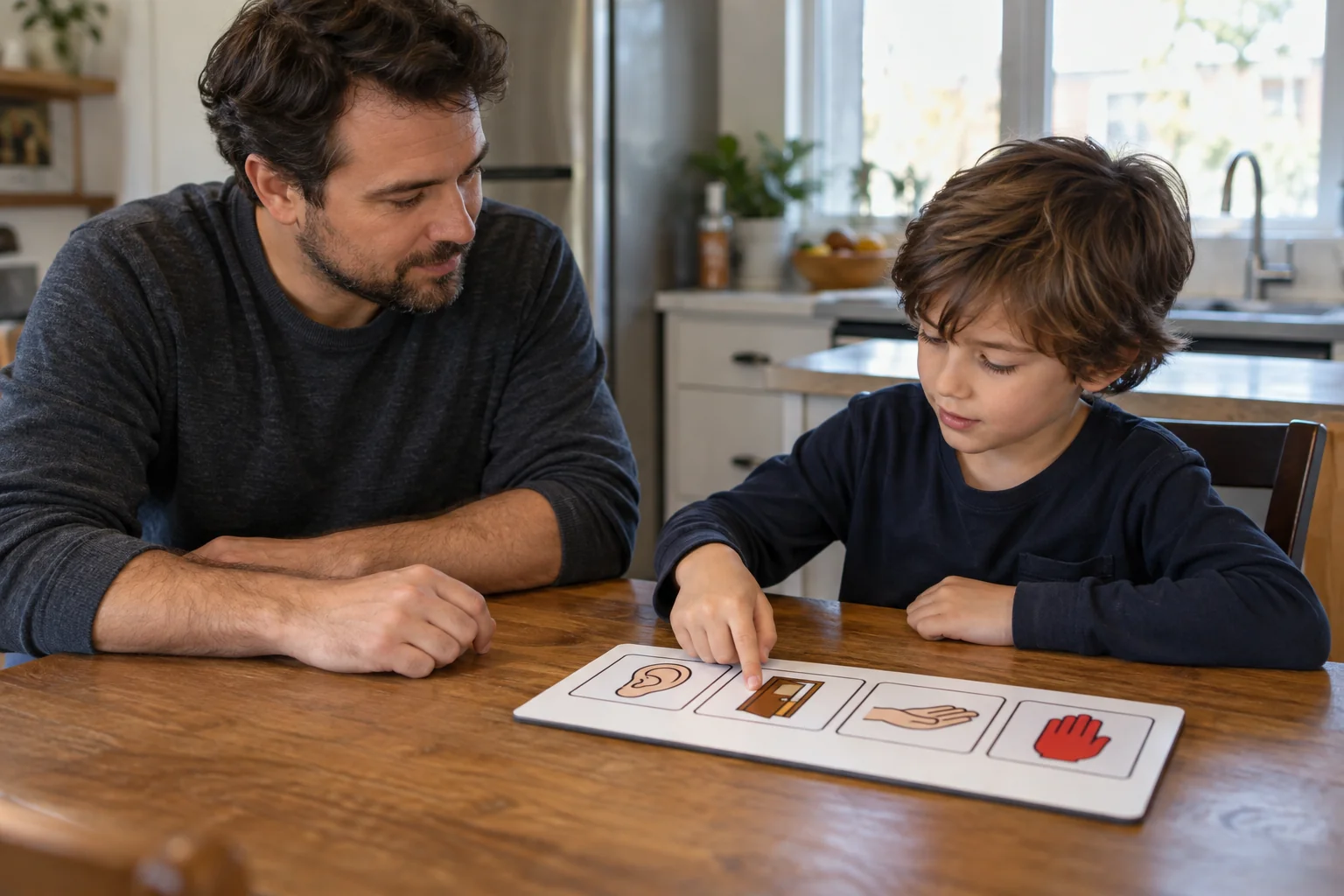
Non-verbal children may communicate through gestures, pictures, signs, writing or a communication device. Limited spoken language does not tell you how much a child understands. Watch their individual ways of asking for help, refusing, choosing and showing discomfort. A child who brings you to the door might want to leave, find someone, or show you something outside. Treat the action as information and offer an accessible way to clarify it.
Augmentative and alternative communication, often called AAC, includes methods that support or replace speech. ASHA's guidance on AAC states that there are no specific prerequisites for getting started. A speech-language pathologist can help families choose appropriate methods and teach adults how to use them. The aim is independent communication that works across home, school and daycare, not choosing a particular device because it appears in an advertisement.
For sound-related situations, useful messages may include “too loud,” “hurts,” “help,” “leave,” “stop” and “finished.” Introduce these within the child's broader communication system during ordinary moments. A child needs ways to talk about food, people, play and interests as well as distress. Keep familiar communication available when you move to another room or go on an outing. A system left in a school bag cannot help during a noisy washroom visit.
Allow time for the child's answer. Offer a manageable choice, then wait rather than repeating the question rapidly. Do not move their hand onto a picture or guide a selection and present it as their own message. When you are unsure, acknowledge the uncertainty: “I think you want to leave. Let's go somewhere quieter and check.” Discuss repeated misunderstandings with the speech-language pathologist so everyone responds consistently.
Even a child who usually speaks may have more difficulty answering during an overwhelming moment. Agree on another familiar signal when they are comfortable. For example, a teenager might send a short message, while a younger child points to a card. The method should suit the person and setting. Requiring a spoken explanation before allowing a break can leave the child without a usable way to get help.
Toddlers and Preschool Children: Watch the Situation Closely

Very young children may cry, cling to a parent, freeze or move away when a sound starts. Those responses are not enough to diagnose autism or hyperacusis. Parents should bring concerns about development, hearing or repeated distress to their child's health professional. Describe what you see across situations, including how your toddler communicates and responds to familiar voices, rather than testing them repeatedly with sounds they already dislike.
At daycare, practical information matters more than a broad label. Tell the daycare workers which situations have been difficult and how your child usually asks for company or help. During singing, for example, an adult might offer the option to watch from the edge of the group instead of moving the child straight into its centre. This is an imagined adjustment to discuss with staff, not a treatment exercise or a requirement to participate.
Keep explanations immediate and concrete. “The blender will start. We can stand over here” is easier to connect with the event than a long description of sensory processing. The adult still manages supervision and the environment. Young children should not be responsible for finding an unsupervised place when a group activity becomes uncomfortable. Review what happened with the adults afterwards, when nobody is trying to manage the activity at the same time.
School-Age Children: Connect Support to the School Day
School-age children may be able to identify the sound but struggle to explain it publicly. Arrange a private conversation with the teacher and include your child in a way they can manage. Ask about specific parts of the day: arrival, assemblies, the lunchroom, washrooms, music class and dismissal. A plan for a difficult transition is more useful than a general instruction that the child can “take a break” without knowing where to go or whom to tell.
An imagined school plan might identify an adult the child can approach before assembly, a place to sit with easier access to the door, and a supervised alternative if the event becomes too much. Staff should clarify how the child returns to class and accesses any learning they missed. Support should preserve participation where possible, rather than quietly replacing every demanding activity with time alone.
Changes in staffing need attention too. A substitute teacher may not know what a card or gesture means. Put the agreed response in the information staff actually use and check that relevant adults can find it. Where adjustments belong in an individual school plan, ask the school to record them there. This reduces the need for your child to explain the same difficulty repeatedly to unfamiliar adults.
Preteens: Make Room for Privacy and Their Own View
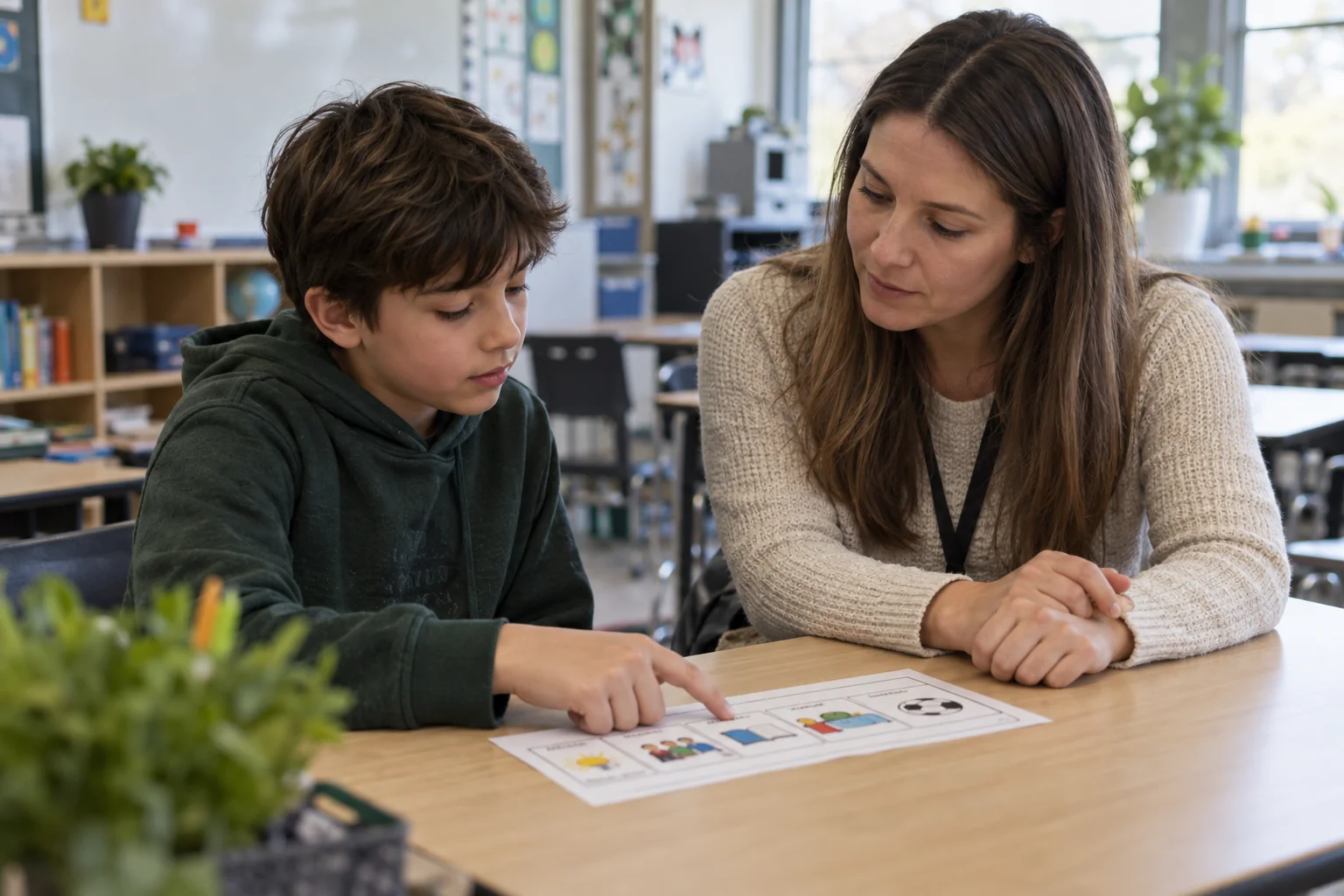
Preteens may dislike having adults discuss their needs in front of classmates. Ask how they want a teacher to offer help and what information they are comfortable sharing. A quiet signal, a conversation before class or a written request may suit them better than a public reminder. Privacy should not depend on the child tolerating discomfort until it becomes obvious to everyone.
Give their account weight even when it differs from yours. You might notice that they left a room; they may explain that the problem was being unable to hear instructions over several conversations. Ask what part was hardest and which change they would try. Some preteens want help planning; others prefer to test an agreed adjustment and report back. Keep responsibility for arranging school support with the adults while giving the child a real say in it.
Teenagers: Plan Around Activities They Value
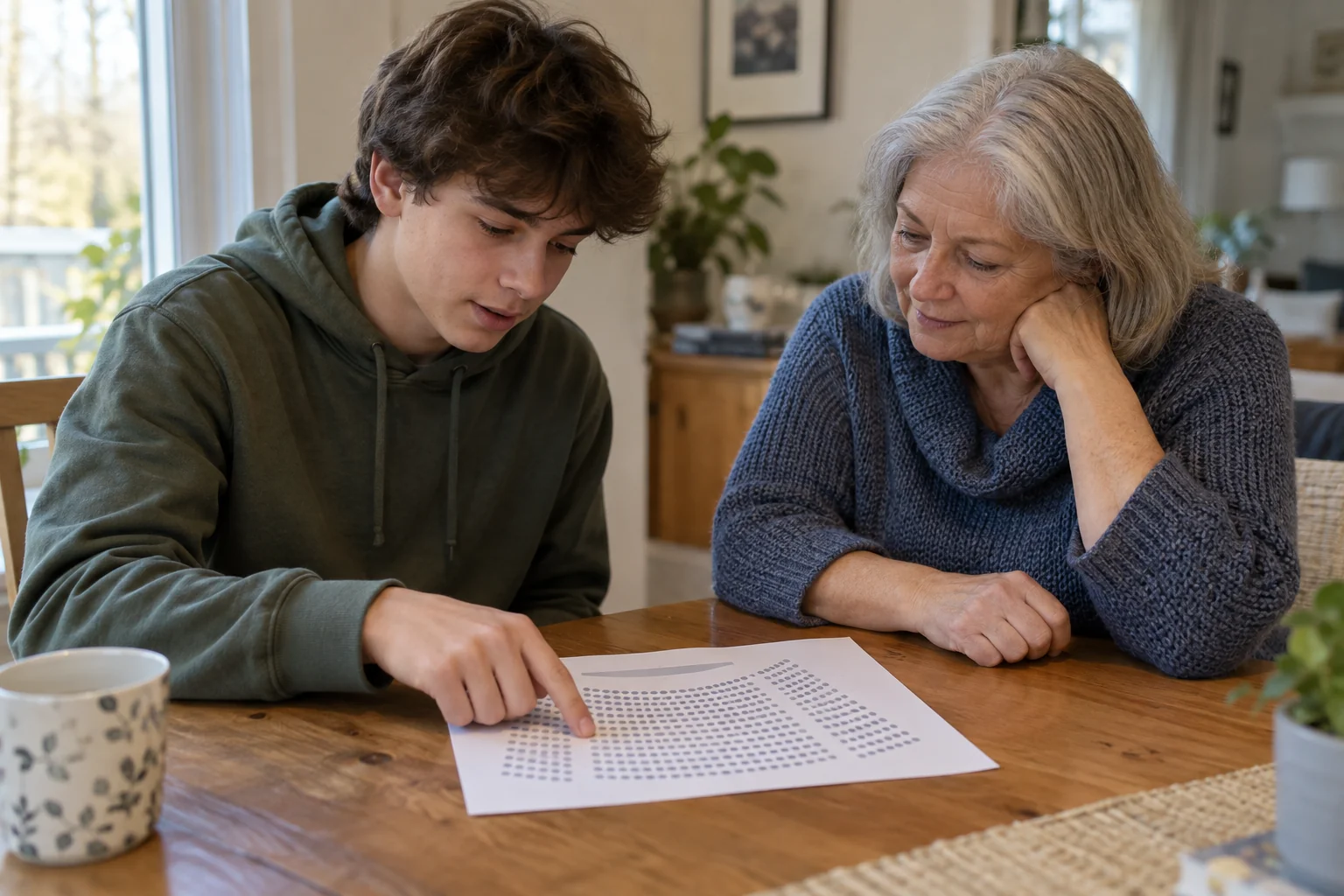
For teenagers, friendships, sports, concerts, transit and part-time work can introduce unfamiliar sound environments. Start with the activity they want to do. Ask about timing, seating, transport, somewhere to step away and how to contact a parent if the plan changes. Being able to make a workable decision about an outing is a more useful goal than promising they will feel comfortable throughout it.
A teenager and grandparent planning a theatre visit might look at the seating layout, ask the venue about quieter performances and agree on a meeting place if they step outside. The teenager can decide how much support they want. Do not assume an aisle seat or quieter performance solves every difficulty; it is an option to consider alongside their experience. Revisit the plan afterwards without treating an early departure as failure.
Older teenagers can also begin participating more directly in health appointments. Help them prepare their own questions, written if preferred, and ask the professional to address them. Explain which decisions still need parental involvement and which they can make themselves. Sound sensitivity does not remove the need for privacy, interests or increasing independence, although the pace and form of that independence will vary.
Practical Help at Home, School and During Outings
Reduce the Noise You Can Control
Begin with a specific problem and one practical change. If a television competes with dinner conversation, turn it off. If several instructions are being given across the classroom, discuss a quieter way to deliver them. If an appliance is the difficulty, consider when it needs to run and whether the child can be in another suitable room. These changes reduce avoidable demands without requiring an expensive setup.
Use your observations to judge the result. Did your child find it easier to eat, understand the instruction or stay in the room? Ask them when possible. Quiet appearance alone is an incomplete measure: a child may remain still while uncomfortable. A useful outcome combines the child's account with what they can do more comfortably. If an adjustment does not help, reconsider the cause rather than adding more changes automatically.
Other family members should understand the arrangement. A grandparent who is about to vacuum can explain what will happen and give the child time to move with an adult if needed. Siblings can continue ordinary activities while adults manage competing noise thoughtfully. Avoid making one child responsible for controlling the whole household, or expecting siblings to maintain silence. Agree on changes that the family can actually use.
Explain Predictable Sounds Before They Start
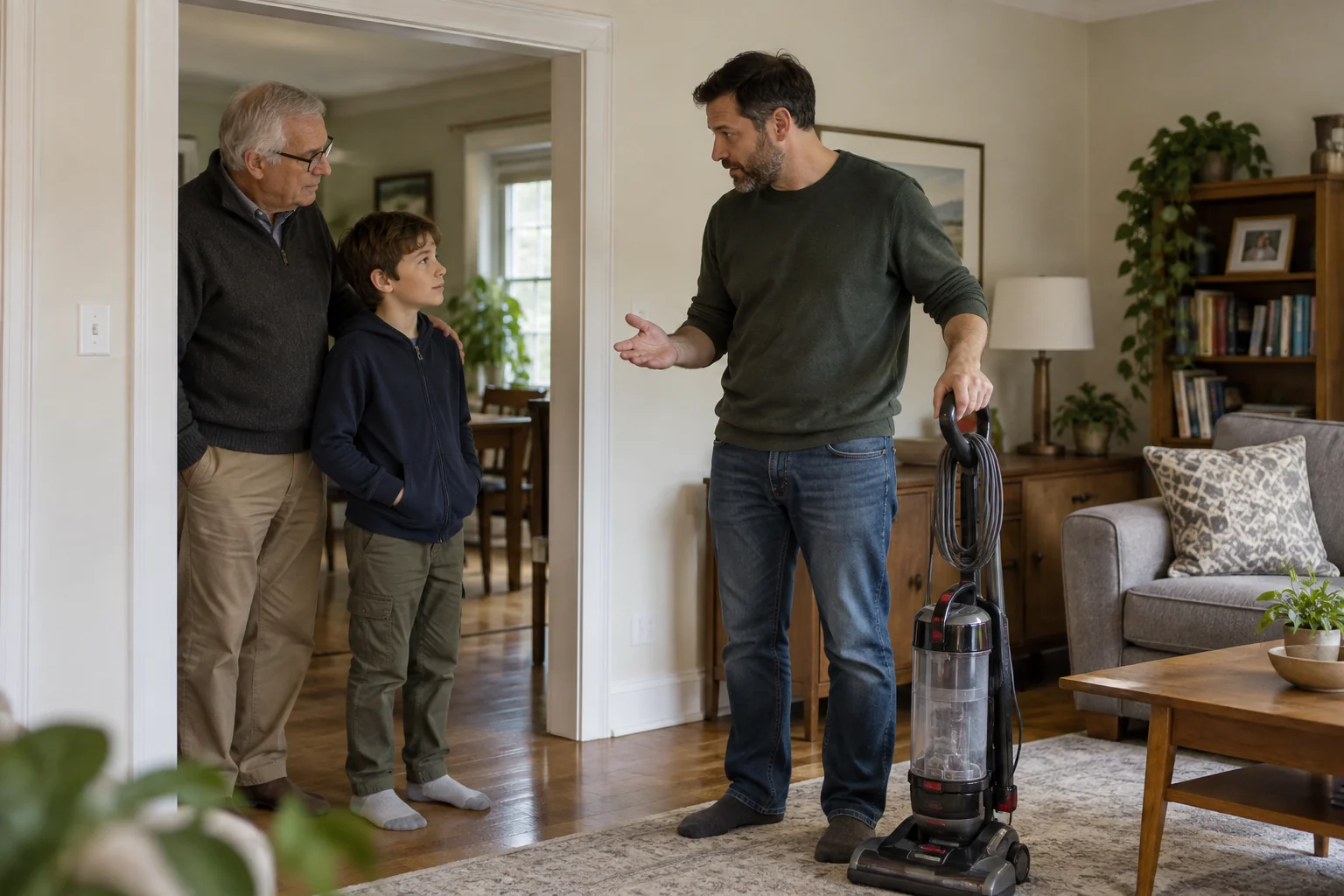
The Hull NHS guidance on sound sensitivity in children includes preparing children for noises. Apply that to events you can predict: a vacuum, blender, school announcement or nearby construction. Keep the explanation accurate and give an available option. “I will vacuum this room after lunch; you can sit with Grandpa in the kitchen” tells the child what will happen and what they can do.
Do not turn warning into a countdown that increases worry. Ask what information your child prefers and keep it proportionate. Some want a picture of the next activity; others only need a brief notice just before the appliance starts. If you promise a warning, follow through. Surprising the child deliberately to see whether they have improved can undermine trust and does not provide a controlled assessment.
Plan Washrooms, Busy Visits and School Events
For a child who dislikes hand dryers, investigate practical washroom options before a long outing. Ask whether paper towels or another washroom are available, and plan enough time to reach it. Avoid asking the child to wait until the need becomes urgent while you search. If no suitable option exists, discuss the difficulty with the venue and consider how it affects the visit rather than promising that the dryer will not run.
At family gatherings, talk to the host about the actual source of difficulty. Turning down music during conversation may help more than preparing a special area far from everyone. Decide which adult will respond if your child wants to step away, and explain the plan to grandparents or other family members who are helping. Keep the child's preferences in the discussion; they may want company, a shorter visit or fewer activities happening together.
School alarms require a different approach because emergency procedures still apply. Ask staff how advance notice of a scheduled drill, where appropriate, and adult support during evacuation can be included in the school's safety plan. An unexpected alarm cannot always be prevented. Do not disable alarms or create an arrangement that prevents the child from hearing essential safety instructions. The school should coordinate any hearing protection or alternative signalling with the relevant professionals and safety requirements.
During Overload, Make the Next Step Easier
If your child becomes overwhelmed, attend first to immediate safety and the source of difficulty. Reduce avoidable sound, move away from a crowd when possible and let one familiar adult take the lead. Keep language brief and leave explanations for later. The National Autistic Society's guidance on meltdowns emphasizes space, time and reducing overwhelming input. A child in intense distress may not be able to take part in a discussion about what happened.
Offer an achievable next action: “We can go outside with Mum” or “I will wait here with you.” Avoid surrounding the child with several adults asking questions. Ask before touching when possible, and follow any individual professional safety plan. If there is immediate danger, seek appropriate emergency help. Support in that moment is about helping the child get through the situation safely, not securing an apology, a lesson or proof that they can tolerate it.
Recovery Does Not Have a Universal Timer
Once the immediate demand has eased, allow time before adding more instructions. Your child might want company, a familiar quiet activity or fewer questions. Follow what they communicate rather than assuming everyone benefits from the same breathing exercise or distraction. A pause should remain supervised where required by age and circumstances, and the child should know how to ask for help or change what is happening.
Later, choose one useful question rather than conducting a full interview. “Was it the announcement or the crowded doorway?” may help clarify the next adjustment. If the child cannot answer, use your observations and discuss recurring difficulties with a professional. Recovery can also affect the rest of the day. Consider whether the remaining plans are realistic, then explain any changes plainly without framing them as punishment.
Assessment, Treatment and Evidence
When to Ask for a Hearing or Medical Assessment
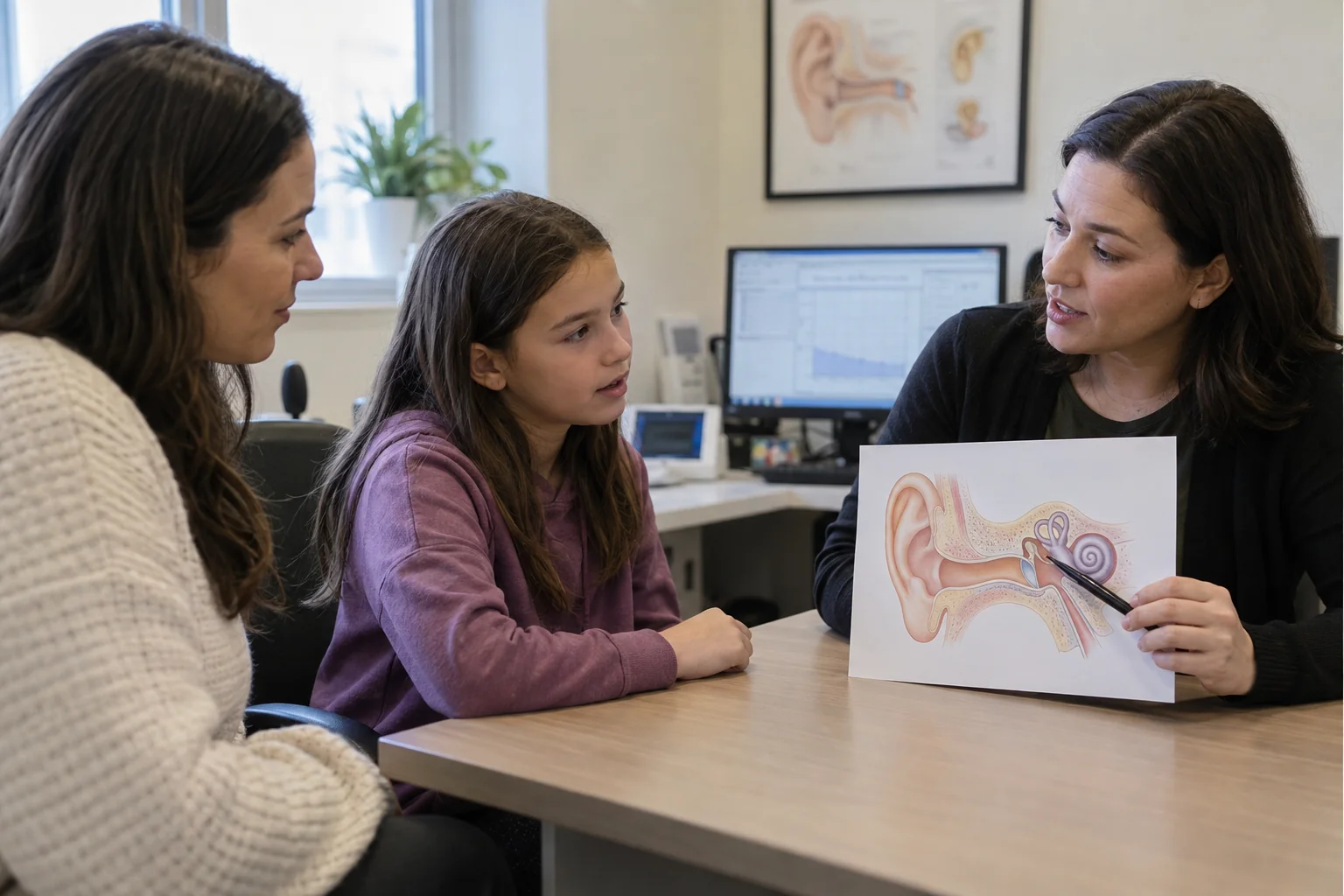
Arrange medical advice when ordinary sounds are painful, sensitivity is persistent, or the difficulty limits school, eating, sleep or outings. Mention sudden changes, ear symptoms and any loss of skills or change in usual communication. Sudden hearing loss needs urgent medical assessment. A child's autism diagnosis should not stop professionals investigating another possible cause. If you are unsure how urgently to seek help, contact an appropriate local health service.
Bring your short examples and your child's account to the appointment. Explain what they can manage comfortably as well as what is difficult. Ask how hearing can be assessed if conventional instructions or spoken answers are challenging. Tell the clinic in advance about communication methods, waiting-room difficulties and anything that might help the visit. Requesting an explanation before equipment is introduced can make the appointment easier to understand without changing what must be assessed.
Which Professional Can Help With Which Question?
A doctor can consider medical causes and make referrals. An audiologist assesses hearing and sound tolerance and can advise on suitable next steps. A speech-language pathologist helps with accessible communication. An occupational therapist can examine how the surroundings and tasks affect everyday participation. A psychologist or other appropriately qualified mental health professional may help when anxiety is an important part of the difficulty. Ask professionals how they will coordinate rather than expecting one service to answer every question.
Make the goal specific. “Help with sensory problems” leaves room for very different expectations. “Understand why ordinary sounds hurt” or “help my child communicate before the lunchroom becomes overwhelming” gives an assessment direction. Ask what the service will measure, how your child's view will be included and what the family will be asked to do between appointments. Discuss cost, time and access before agreeing to a programme.
Anxiety Support and Sound Treatment Are Different Decisions
Anxiety can develop around an expected sound, including after an unpleasant experience. Addressing it does not mean dismissing the original discomfort. NICE recommends considering adapted cognitive behavioural therapy for anxiety in children and young people with autism who can engage with it. Suitability depends on the individual, including their communication and understanding. Ask what adaptations will be used and how the professional will distinguish anxiety from pain or another hearing problem.
The NHS lists sound therapy and CBT among possible approaches to hyperacusis. These are decisions to make with an appropriate professional, not instructions to increase noise at home. The NHS advises stopping sound therapy and contacting a doctor if sounds are uncomfortably loud or painful. Do not force exposure, repeatedly play a distressing recording or use a volume schedule found online as a substitute for an individualized plan.
What the Evidence Says About Sensory Programmes
Some advertised approaches use scientific language without showing benefits for the outcome a family wants. A Cochrane review of auditory integration training and related sound therapies found no evidence establishing them as effective treatments for autism. That conclusion concerns those approaches; it should not be confused with a hearing specialist's assessment and treatment of hyperacusis.
The SenITA randomized controlled trial studied 138 children with autism and sensory difficulties in mainstream primary education. A 26-week sensory integration programme did not show significant overall effects on the trial's principal measures at six or twelve months compared with usual care. Reported individual goal improvements require caution because equivalent goal measurement was not available in the comparison group. The trial does not test every form of occupational therapy or every child, but it does limit broad claims of guaranteed improvement.
Before paying for a programme, ask for research on the actual method, population and outcome. Find out whether the study compared it with another approach, measured adverse effects and followed children beyond the sessions. Testimonials may describe a family's experience, but they cannot establish treatment effectiveness. A professional should be able to explain the uncertainty and what would prompt them to change or stop the plan.
Hearing Protection Needs an Individual Plan
Hearing protection has a role around genuinely hazardous noise. For hyperacusis, the NHS cautions against wearing earplugs or ear defenders continuously because this can increase sensitivity; short-term use may help in very noisy environments. That is not an instruction to remove protection abruptly from a distressed child. Ask an audiologist how to balance comfort, participation, communication and protection in the situations your child faces.
No particular brand is recommended here. A product should be judged by evidence for its intended purpose, appropriate fit and professional advice where needed. A claim that something is “sensory” does not prove it treats sound intolerance. If an item is considered, agree on the problem it is meant to address and how you will know whether it helps. Consider access to speech, alarms and supervision as part of that decision.
Keep One Shared Plan and Review What Matters
Parents, grandparents, other family members, teachers and daycare workers need a plan they can recognize and use. Record the difficult situations, the child's communication, the first practical response, any professional instructions and whom to contact. Keep the plan brief enough to use, while placing detailed treatment instructions with the appropriate professional documents. Update it when a routine, school setting or communication method changes.
Review meaningful outcomes rather than counting only quiet moments. Can your child tell someone that a sound hurts? Are they attending an activity they value with less discomfort? Do the adults understand what to do? Choose a small number of goals and include the child's account. Improvements can be uneven, and a different environment may need a different arrangement. Persistent difficulties are a reason to revisit assessment and support, not to blame the child or family.
An Optional Pause Space
When your child would like a defined place for a voluntary pause, explore JenneTastic. It is a portable indoor space for children aged three and older, with constant adult supervision and a clear entrance and exit. It is not a treatment for autism or sound sensitivity, and no soundproofing benefit is claimed here. Follow the current product instructions and your child's preferences when deciding whether it fits your family.